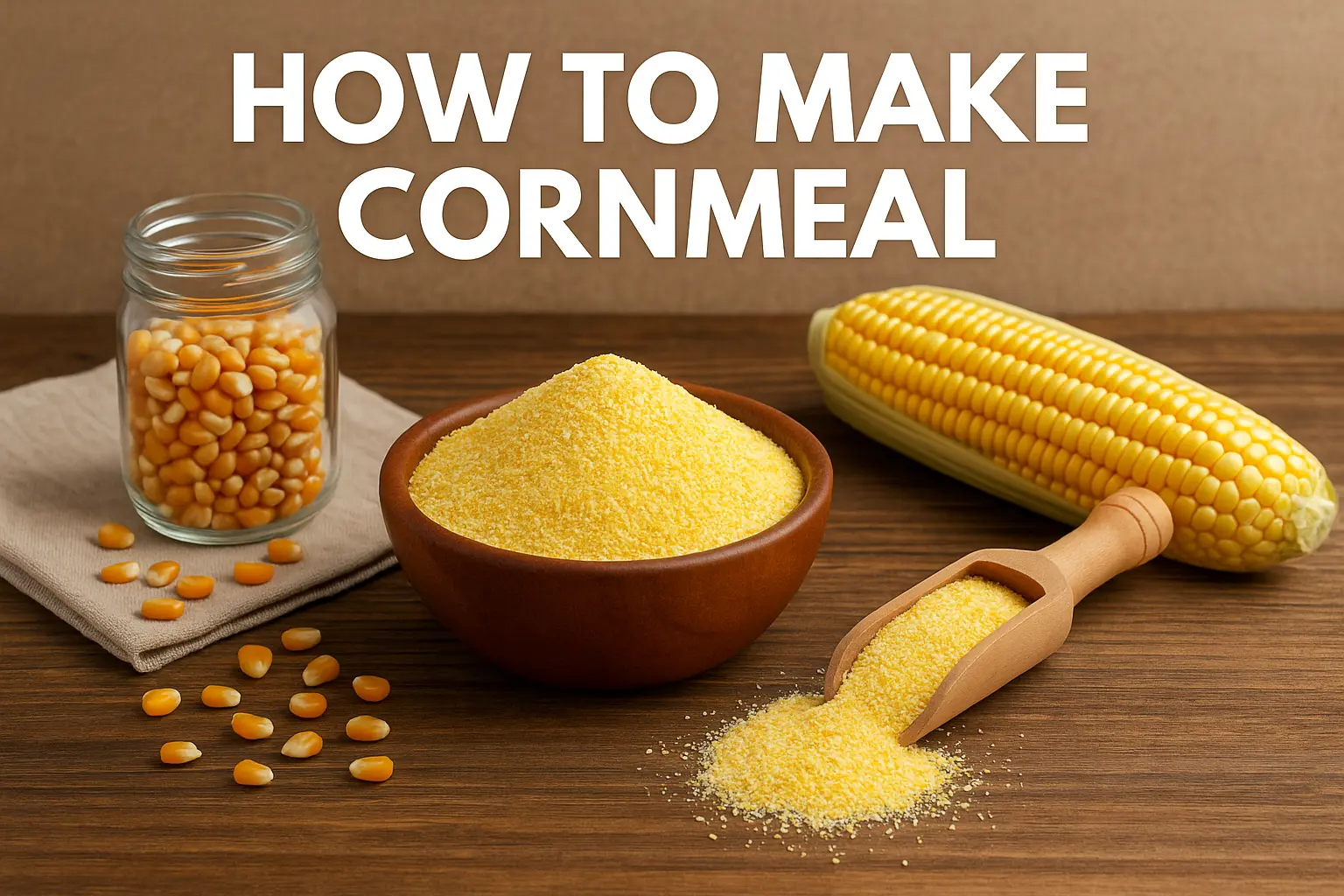
Cornmeal, a humble yet incredibly versatile ingredient, forms the backbone of countless beloved dishes across global cuisines. From the comforting warmth of fluffy cornbread and the satisfying crunch of fried fish coatings to hearty bowls of polenta and delicate pancakes, this finely ground grain has been a kitchen staple for centuries. While the convenience of store-bought cornmeal is undeniable, there's a world of flavor, freshness, and control waiting for those who discover the simple art of making it at home. Learning how to make cornmeal isn't just a culinary skill; it's an invitation to unlock a new dimension of taste in your cooking.
This comprehensive guide will walk you through everything you need to know about transforming dried corn kernels into exquisite cornmeal. We'll delve into the distinct advantages of homemade over commercial varieties, explore the best types of corn for grinding, outline the essential tools, and provide a clear, step-by-step process to ensure perfect results every time. Prepare to elevate your baking and cooking with cornmeal that boasts unparalleled flavor and freshness.
The Unbeatable Advantages of Homemade Cornmeal
Why go to the effort of making your own cornmeal when bags are readily available at any grocery store? The answer lies in a combination of factors that significantly impact the quality of your culinary creations. Once you experience the difference, you might never go back.
Unrivaled Freshness and Flavor
Perhaps the most compelling reason to learn how to make cornmeal at home is the incredible boost in freshness and flavor. Commercially processed cornmeal, by its very nature, is designed for a long shelf life. This often means it's stripped of some of its natural oils, treated with preservatives, and can sit in warehouses and on store shelves for extended periods. As it ages, it inevitably loses its vibrant, earthy aroma and sweet, nuanced taste.
When you grind cornmeal yourself, you're harnessing the peak freshness of the grain. The moment you mill the kernels, the natural oils and volatile compounds are released, providing an intensity of flavor and a delightful fragrance that simply cannot be matched by even the highest-quality store-bought alternatives. Imagine the difference between freshly ground coffee and pre-ground beans – it's that significant.
Complete Control Over Grind Size and Texture
Another powerful advantage of homemade cornmeal is the ability to dictate the grind size. Recipes often call for specific textures – fine, medium, or coarse – and store shelves typically offer only a few generic options. When you're making your own, you are the master of texture:
- Fine Grind: Ideal for delicate baked goods like pancakes, muffins, or when you want a smooth, tender crumb.
- Medium Grind: Perfect for traditional cornbread, waffles, or a crispy coating for fried foods.
- Coarse Grind: The choice for rustic polenta, grits, or creating a more substantial texture in savory dishes.
This level of control allows you to tailor your cornmeal precisely to your culinary needs, opening up a wider range of recipe possibilities and ensuring optimal results.
Purity and Nutritional Integrity
By making cornmeal yourself, you control the ingredients entirely. You avoid potential preservatives, anti-caking agents, or bleaching often found in commercial products. Furthermore, grinding your own whole grains means retaining more of the corn's natural nutrients, including fiber, vitamins, and minerals, which can sometimes be diminished in highly processed versions.
Choosing Your Corn: The Foundation of Flavor
Not all corn is created equal when it comes to producing high-quality cornmeal. Selecting the right type of dried corn kernels is the crucial first step in your journey to master making cornmeal at home: essential tools & best corn varieties.
Types of Corn Used for Cornmeal
- Dent Corn: This is by far the most common variety used for cornmeal and is often referred to as "field corn." Characterized by a small indentation or "dent" at the crown of each kernel when dried, it has a soft, starchy interior that grinds beautifully into a versatile meal. Both white and yellow dent corn are excellent choices, offering slightly different flavor profiles.
- Flint Corn: Known for its hard, glassy kernels, flint corn has a lower starch content and a tougher outer hull. It produces a coarser, often more rustic meal, making it a favorite for traditional Italian polenta and some Native American dishes. Varieties like 'Hopi Blue' or 'Floriani Red' flint corn offer unique colors and flavors.
- Sweet Corn: While delicious fresh off the cob, sweet corn is not suitable for cornmeal. It lacks the necessary starch content and structure to yield a proper meal, and its high sugar content can also cause issues during drying and grinding.
- Popcorn: Surprisingly, standard popcorn kernels can be ground into a delicious cornmeal, especially heirloom varieties. They typically produce a finer, more tender meal.
Sourcing Dried Corn Kernels
The key to successful homemade cornmeal is starting with truly dried, whole kernels. Here’s where to find them:
- Local Farmers' Markets: Many farmers sell dried whole corn for grinding, especially in agricultural regions. This is a great way to support local producers and potentially find heirloom varieties.
- Health Food Stores & Specialty Grocers: Look for bulk bins or packaged organic dried corn kernels, often labeled for grinding.
- Online Suppliers: Numerous websites specialize in organic and heirloom dried grains, offering a wide selection of corn varieties in bulk.
Critical Tip: Ensure Dryness! Regardless of your source, verify that the corn kernels are completely dry. Moisture is the enemy of good cornmeal, leading to mold during storage and creating an uneven, clumpy grind. Kernels should be hard and brittle.
Essential Tools for Grinding Cornmeal at Home
You don't need a commercial milling operation to achieve fantastic results at home. Several common kitchen appliances can be repurposed for grinding cornmeal, each offering different levels of efficiency and fineness. For a complete guide to all the options available, consider checking out Making Cornmeal at Home: Essential Tools & Best Corn Varieties.
- Grain Mill (Electric or Manual): For consistent results and efficiency, especially if you plan to make cornmeal regularly or in larger batches, a dedicated grain mill is the best investment. Electric mills are fast and powerful, while manual mills offer a quieter, more traditional experience and are great for off-grid situations. Many mills allow you to adjust the grind setting from coarse to very fine.
- High-Powered Blender (e.g., Vitamix, Blendtec): These kitchen workhorses are surprisingly effective for grinding small to medium batches of cornmeal. Their powerful motors and sharp blades can transform dried kernels into a decent meal, often achieving a fine to medium texture. You'll typically need to pulse and blend in stages, and may need to sift and re-grind any larger pieces.
- Food Processor: A food processor can also be used, though it tends to produce a coarser, more inconsistent grind compared to a blender or grain mill. It's best suited for medium-textured cornmeal where absolute fineness isn't critical. Avoid over-processing, which can heat the cornmeal and potentially affect its flavor.
- Mortar and Pestle: This ancient method is labor-intensive and best for very small batches or for achieving a deliberately rustic, uneven texture. It's a satisfying, meditative process for those who appreciate traditional techniques.
Beyond the grinder itself, you'll need a few other items:
- Baking Sheets: Useful for spreading out kernels if they need additional drying.
- Airtight Containers: Essential for storing your freshly ground cornmeal to maintain its freshness.
- Fine-Mesh Sieve (Optional but Recommended): For sifting out larger pieces and re-grinding for a more uniform texture.
Preparing Your Corn Kernels for Grinding
Proper preparation is key to a smooth grinding process and a high-quality finished product. Don't skip these crucial steps:
- Inspect Thoroughly: Spread your dried corn kernels on a clean surface and carefully inspect them. Remove any discolored, moldy, damaged, or shriveled kernels, as these can impart off-flavors or even damage your grinding equipment.
- Clean (If Necessary): If your kernels appear dusty or have any debris, a quick rinse under cold water is advisable. Pat them thoroughly dry with a clean towel or paper towels immediately afterward.
- Ensure Absolute Dryness: This step cannot be overstressed. Any residual moisture will lead to a clumpy grind, potential mold growth during storage, and can strain your grinding equipment. If you're unsure if your kernels are dry enough, or if they feel even slightly damp, spread them in a single layer on a baking sheet. Place them in an oven at its lowest setting (around 200°F or 95°C) for 1-2 hours. Turn off the oven and let them cool completely inside before grinding. They should be hard, brittle, and snap easily.
- Optional Soaking & Re-drying (Advanced): Some traditional methods involve soaking corn kernels in a lime solution (nixtamalization) or simply in water to soften the hulls before re-drying and grinding. This can improve nutrient availability and texture, particularly for making masa. However, for general cornmeal using dent or flint corn, this step is usually unnecessary and adds significant time and effort.
How to Make Cornmeal: The Grinding Process
Once your corn is perfectly prepped, it's time for the magic to happen! The exact steps will vary slightly depending on your chosen tool. For a more exhaustive guide on the entire grinding process and beyond, consider visiting How to Make Fresh Cornmeal: A Complete Guide to Homemade Grain.
Using a Grain Mill
- Set Up: Place your grain mill on a sturdy, stable surface. Ensure the collection bin or bag is securely in place.
- Adjust Grind: Start with a coarse setting. It's often easier to grind coarsely first and then refine, rather than trying to achieve a super fine grind in one pass.
- Feed Kernels: Pour a manageable amount of dried corn kernels into the hopper.
- Grind: Activate your electric mill or begin cranking your manual mill. The kernels will be crushed and emerge as coarse cornmeal.
- Refine (Optional): If you desire a finer meal, collect the coarsely ground cornmeal and pass it through the mill again, adjusting the setting to a finer grind. Repeat until you reach your desired texture.
Using a High-Powered Blender
- Load in Batches: Due to the blender's capacity, work in small batches (no more than 1-2 cups of kernels at a time) to prevent overheating and ensure an even grind.
- Pulse First: Begin by pulsing the kernels several times. This helps to break them down into smaller pieces before continuous blending.
- Blend: Blend on high speed, watching the consistency. You may need to stop, shake the container, or use a tamper to push the kernels towards the blades.
- Sift and Regrind: Once blended, pour the cornmeal through a fine-mesh sieve. Any larger pieces or unground kernels can be returned to the blender for a second pass until everything reaches your desired consistency.
Using a Food Processor
- Small Batches: Like with a blender, work in small batches.
- Pulse and Process: Use the "pulse" setting primarily to break down the kernels. Continuous processing can quickly turn the cornmeal into a paste due to heat and over-processing.
- Check Consistency: Periodically stop and check the consistency. You'll likely achieve a medium to coarse grind. Sift and re-process as needed.
Storing Your Freshly Ground Cornmeal
Once you've mastered how to make cornmeal, proper storage is crucial to preserve its incredible freshness and flavor:
- Airtight Containers: Always store homemade cornmeal in tightly sealed, airtight containers to protect it from moisture, air, and pantry pests.
- Cool, Dark Place: For short-term storage (a few weeks), a cool, dark pantry or cupboard is sufficient.
- Refrigerate or Freeze: To extend shelf life significantly, store your cornmeal in the refrigerator (up to 3-4 months) or freezer (up to 6-12 months). The colder temperatures prevent the natural oils from oxidizing and turning rancid.
Conclusion
Learning how to make cornmeal at home is a rewarding endeavor that promises to elevate your cooking and baking to new heights. The unparalleled freshness, vibrant flavor, and customizable texture of homemade cornmeal will open up a world of culinary possibilities, from the most authentic cornbread you've ever tasted to perfectly crispy fried coatings and exquisite polenta. It's a simple process that connects you more deeply with your food and offers a truly superior ingredient. So, gather your dried corn, choose your grinding tool, and prepare to unlock a depth of flavor that store-bought cornmeal simply can't touch.
